
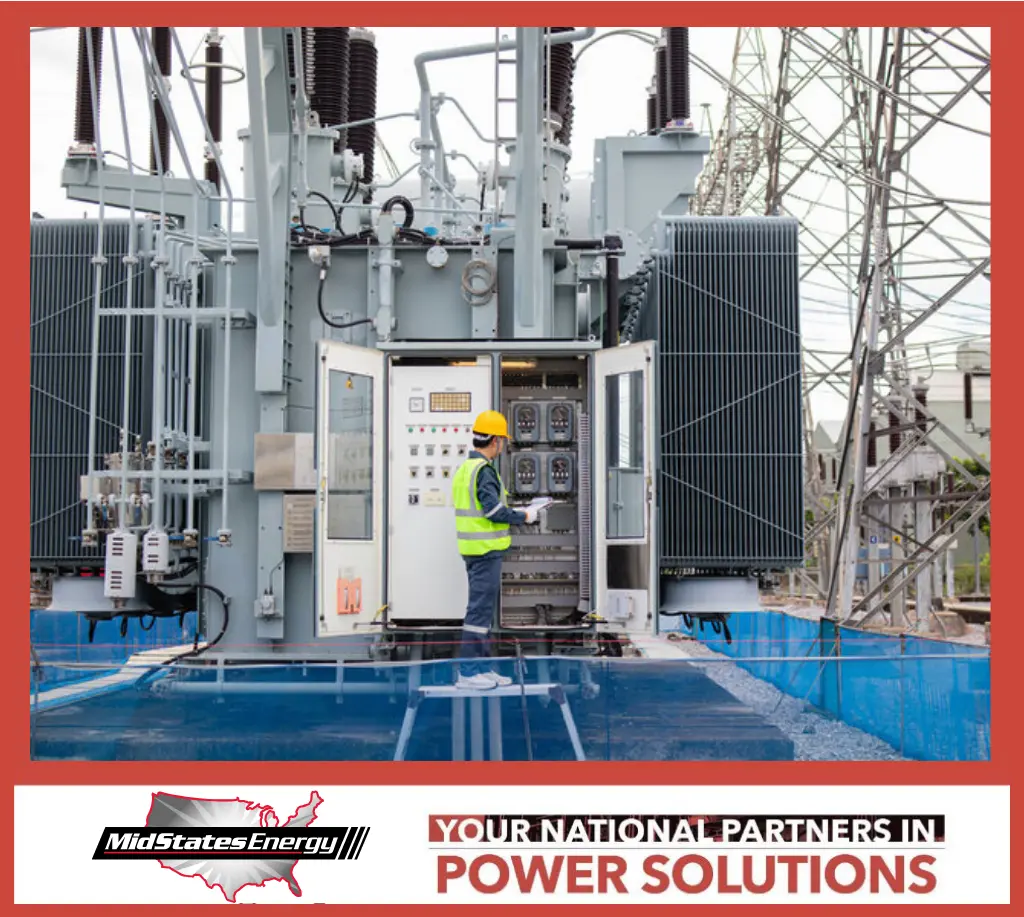
Practical strategies, inspection methods, diagnostic testing, and maintenance planning for long-term transformer reliability.
Transformers are essential to reliable electrical power distribution across industrial facilities, commercial buildings, manufacturing plants, and utility substations. When a transformer fails unexpectedly, the consequences can include production delays, equipment damage, expensive emergency repairs, and interruptions to critical operations.
Preventive transformer maintenance helps organizations identify developing problems before they become major failures. Through regular inspections, transformer oil analysis, electrical testing, and condition monitoring, businesses can improve equipment reliability, extend transformer service life, and control maintenance costs.
This guide explains the essential transformer maintenance practices, their benefits, and how experienced electrical service providers such as MidStates Energy support reliable power systems through inspection, diagnostics, repairs, and preventive maintenance programs.
The appropriate maintenance schedule depends on transformer design, operating conditions, manufacturer guidance, and equipment history.
What Is Preventive Transformer Maintenance?
Preventive transformer maintenance is the scheduled inspection, testing, cleaning, and servicing of electrical transformers to identify deterioration and reduce the risk of unexpected failure.
Unlike corrective maintenance, which takes place after a problem occurs, preventive maintenance addresses potential issues before they interrupt operations. It applies to oil-filled, dry-type, pad-mounted, pole-mounted, and substation transformers, although the specific maintenance requirements differ by equipment type.
A structured transformer maintenance program commonly includes:
- Visual inspections for leaks, corrosion, cracks, and damaged components.
- Transformer oil sampling and dissolved gas analysis (DGA), where applicable.
- Insulation resistance and turns ratio testing.
- Infrared thermography to identify abnormal heat patterns.
- Cooling system inspections and load monitoring.
- Inspection of bushings, connections, protective devices, and load tap changers.
Why Transformer Maintenance Matters
Transformers operate under electrical, thermal, and environmental stress. Over time, these conditions can weaken insulation, degrade oil, loosen connections, and affect cooling performance.
Regular maintenance helps identify these problems while corrective action can still be planned around operational requirements.
Key benefits include:
- Reduced downtime: Early fault detection allows maintenance teams to schedule interventions before equipment failure causes an unplanned outage.
- Lower repair costs: Addressing minor leaks, deteriorating insulation, or cooling issues can help prevent more extensive damage.
- Extended equipment lifespan: Appropriate servicing helps preserve insulation systems and mechanical components.
- Improved electrical safety: Inspections can reveal conditions that require correction before they create additional hazards.
- Better operational planning: Maintenance records and diagnostic reports support budgeting, replacement planning, and outage scheduling.
For facilities where electrical interruptions affect production or essential services, preventive maintenance is an important part of asset management and business continuity planning.
Common Causes of Transformer Failure
Understanding why transformers fail helps maintenance teams prioritize inspections and allocate resources effectively.
Common causes include:
- Insulation deterioration: Heat, moisture, electrical stress, and aging can weaken insulation and increase the risk of electrical faults.
- Overloading: Operating above suitable load limits increases temperature and accelerates insulation aging.
- Oil contamination: Moisture and contaminants can compromise the insulating and cooling properties of transformer oil.
- Cooling system problems: Blocked radiators, malfunctioning fans, and pump failures can cause excessive operating temperatures.
- Loose connections and component wear: Damaged bushings, deteriorating contacts, and faulty tap changers can affect performance and reliability.
These issues may develop gradually, making routine transformer inspections and diagnostic testing valuable for identifying warning signs before a major breakdown.
Essential Preventive Maintenance Tasks
An effective maintenance program combines physical inspections with electrical testing and condition assessment.
Visual Inspection
Inspect accessible transformer components for oil leaks, corrosion, cracked insulators, damaged wiring, unusual noise, and signs of overheating. Check gauges, grounding connections, ventilation, and protective equipment according to the manufacturer’s procedures.
Document any abnormal findings and establish a priority for corrective action.
Transformer Oil Testing
For oil-filled transformers, oil sampling can help identify moisture, oxidation, contamination, and changes in dielectric properties. Dissolved gas analysis can reveal gases associated with developing internal faults.
Results should be interpreted alongside previous samples, operating conditions, and equipment history rather than in isolation.
Electrical Diagnostic Testing
Insulation resistance testing evaluates insulation condition, while turns ratio testing checks whether voltage transformation matches expected values. Power factor testing can provide additional information about insulation integrity.
Qualified technicians should select appropriate tests, equipment, acceptance criteria, and safe isolation procedures for each transformer.
Thermal Imaging and Cooling System Checks
Infrared thermography can identify abnormal temperature patterns around accessible connections and components. Maintenance teams should also examine cooling fans, pumps, radiators, and ventilation paths.
Combining thermal data with load information helps distinguish potential equipment defects from temperature changes associated with normal operating conditions.
Preventive vs. Predictive Maintenance
Preventive and predictive maintenance work together, but they serve different purposes.
- Preventive maintenance follows a planned schedule based on manufacturer recommendations, operating conditions, and maintenance history.
- Predictive maintenance uses diagnostic measurements, condition monitoring, and trend analysis to identify developing faults and estimate when intervention may be needed.
- Corrective maintenance addresses an identified defect or failure.
For example, a facility might schedule annual visual inspections while using oil analysis and thermal imaging to investigate changes in transformer condition. This approach combines routine care with evidence-based decisions about additional testing or repairs.
MidStates Energy offers preventive and predictive maintenance, advanced diagnostics, component repairs, and transformer modernization services to support different stages of equipment life.
General Maintenance Statistics and Performance Indicators
Maintenance planning should rely on verified equipment data and measurable performance indicators. Published figures can provide context, but they should not be treated as guaranteed savings or universal transformer failure rates.
The following table uses general industry maintenance indicators rather than claiming a specific percentage reduction in downtime or repair costs.
| Maintenance indicator | What to monitor | Why it matters |
| Inspection frequency | Scheduled inspections completed | Helps identify emerging defects |
| Oil condition | Moisture, dielectric properties, and DGA trends | Supports early fault investigation |
| Equipment temperature | Operating temperature and thermal anomalies | Helps detect overheating |
| Unplanned downtime | Hours lost to transformer-related interruptions | Measures operational disruption |
| Repair expenditure | Preventive and corrective maintenance costs | Supports budget planning |
Establishing a baseline makes it easier to evaluate whether a maintenance strategy is improving reliability over time. Actual results depend on transformer age, loading, environment, equipment condition, and maintenance quality.
Best Practices for Reducing Downtime and Repair Costs
Organizations can strengthen transformer reliability by making maintenance a planned operational activity rather than an emergency response.
Develop an equipment-specific maintenance schedule. Consider transformer design, criticality, loading, environmental exposure, and manufacturer guidance. High-risk assets may require more frequent inspections or additional monitoring.
Maintain accurate service records. Record test results, oil analysis, repairs, component replacements, and operating abnormalities. Historical data helps technicians recognize deterioration that a single inspection might miss.
Plan maintenance outages carefully. Coordinate testing and repairs with production schedules, available backup power, and operational requirements. Some diagnostic activities may be performed while equipment is energized, but others require isolation and shutdown.
Address warning signs promptly. Persistent overheating, oil leaks, unusual noise, repeated protective-device trips, or abnormal test results warrant qualified assessment.
Evaluate repair versus replacement. Compare repair costs, remaining service life, spare-part availability, reliability requirements, and future load demand before deciding whether to refurbish or replace an aging transformer.
Finally, follow applicable electrical safety requirements and use qualified personnel for high-voltage work. Preventive maintenance should never compromise worker safety to avoid a planned outage.
Why Professional Transformer Services Matter
Transformer maintenance requires specialized equipment, technical expertise, and a clear understanding of electrical hazards. An experienced service provider can help facilities select appropriate diagnostic tests, interpret results, prioritize repairs, and plan equipment upgrades.
Preventive Transformer Maintenance for Improved Electrical Reliability
Preventive transformer maintenance is a practical investment in electrical reliability, equipment longevity, and cost control. Regular inspections, oil analysis, electrical diagnostics, thermal monitoring, and accurate maintenance records help organizations identify potential problems before they develop into expensive disruptions.
Combining scheduled maintenance with condition-based monitoring allows facilities to make better-informed repair and replacement decisions. With an appropriate maintenance strategy and qualified technical support, businesses can reduce avoidable downtime, improve electrical safety, and maintain dependable power distribution over the long term.
MidStates Energy offers transformer inspections, oil analysis, insulation resistance testing, thermal diagnostics, load tap changer maintenance, repairs, installation, and commissioning.
FAQs
How often should transformers receive preventive maintenance?
Inspection frequency depends on equipment type, age, loading, environment, and manufacturer recommendations. Annual inspections may be appropriate for some assets, while critical or heavily loaded transformers may require more frequent assessment.
Can preventive maintenance reduce transformer repair costs?
Yes. Identifying developing problems early can help avoid extensive damage and emergency repair work. Actual savings depend on the fault, equipment condition, and the effectiveness of the maintenance program.
What tests are commonly included in transformer maintenance?
Common tests include insulation resistance testing, turns ratio testing, transformer oil analysis, dissolved gas analysis, power factor testing, and infrared thermography, as appropriate for the equipment.
What are the warning signs of transformer failure?
Warning signs include overheating, oil leaks, unusual noise, abnormal test results, cooling system problems, and repeated protective-device trips. Qualified technicians should investigate these conditions promptly.
Can professional transformer maintenance prevent unexpected downtime?
It can reduce the risk of avoidable failures through early detection, timely repairs, and planned maintenance. However, no maintenance program can eliminate every failure or guarantee uninterrupted power.